 Reviews



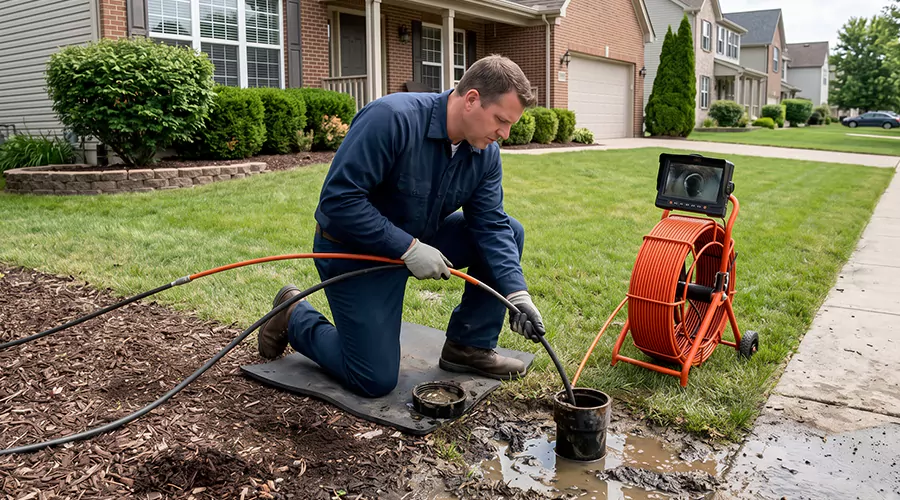
A main sewer line clog usually develops when grease or unsuitable waste accumulates inside the pipe. Tree roots can also enter damaged sewer lines and trap debris. Structural pipe defects create additional restrictions that may cause repeated backups.
Professional main sewer line clog repair costs approximately $380 on average in the United States in 2026. More involved projects can cost substantially more when the obstruction requires specialized cleaning or damaged piping must be replaced. Unlike an ordinary sink clog, a main sewer restriction can affect several household fixtures. Recognizing the causes and warning signs can help prevent sewage from backing up into the property.
What Are the Most Common Causes of a Main Sewer Line Clog?
A main sewer line becomes clogged when waste collects inside the underground pipe that carries household wastewater away from the property. Grease and inappropriate flushed materials are common contributors. Tree roots or damaged piping may create places where additional debris becomes trapped.
Common causes include:
- Cooking grease: Fats accumulate inside pipes and reduce the available opening.
- Disposable wipes: Materials that do not break apart readily can catch on existing restrictions.
- Hygiene products: Items unsuitable for flushing may obstruct the sewer.
- Tree roots: Roots enter openings in damaged underground pipes.
- Pipe corrosion: Deteriorating internal surfaces can trap additional material.
- Pipe misalignment: Displaced joints create edges where debris collects.
- Sagging sections: Low points allow wastewater and solids to accumulate.
- Foreign objects: Unsuitable materials become lodged inside the line.
The EPA identifies grease and tree-root intrusion among the causes of sanitary sewer blockages. It also warns that inappropriate household products can contribute to serious wastewater problems.
How Does Grease Block a Main Sewer Line?
Grease can enter household drainage as a liquid and then accumulate farther inside the system. As it cools, it can adhere to pipe surfaces. Additional grease and solid waste may collect until the remaining opening becomes too small for normal wastewater flow. Repeated disposal of cooking oil can gradually contribute to this buildup.
Grease can also combine with other debris and create a dense obstruction. For example, an underground sewer line may continue working during ordinary sink use but struggle when the washing machine releases a large volume of wastewater. The problem becomes more noticeable as the remaining drainage capacity decreases.
New York City's Department of Environmental Protection identifies improper grease disposal as a major contributor to sewer backups.
Why Do Tree Roots Enter Sewer Lines?
Tree roots can enter underground sewer pipes through cracks or defective joints. Roots grow toward available moisture and may enter openings in deteriorating piping. Once inside, they can obstruct wastewater movement and collect additional debris. A recurring root problem may continue even after the visible obstruction has been cleared.
Removing the roots does not automatically repair the opening that allowed them to enter. The EPA identifies root intrusion through pipe defects as a recognized cause of sewer blockages.
Possible warning signs include:
- Drainage problems that return after cleaning.
- Several household fixtures becoming slow.
- A history of root intrusion in the same line.
- Repeated backups near an older underground sewer.
- A confirmed pipe defect during inspection.
Tree roots cannot be diagnosed from slow drainage alone.
Can Flushable Wipes Block the Main Sewer Line?
Wipes can contribute to sewer blockages because many do not break apart as readily as ordinary toilet paper. They may catch on existing grease deposits or damaged pipe connections. Additional waste then collects around the obstruction.
Problematic materials include:
- Baby wipes.
- Cleaning wipes.
- Paper towels.
- Disposable hygiene products.
- Other solid household materials not intended for flushing.
Even products marketed as flushable can contribute to wastewater-system problems. The EPA identifies wipes and inappropriate household waste among the causes of sewer blockages. Dispose of these materials in the trash rather than the toilet.
Can Damaged Pipes Cause Recurring Sewer Clogs?
Damaged sewer pipes can collect debris when their internal surfaces or alignment prevent wastewater from moving normally. A displaced joint may catch passing waste. A sagging section can retain water and allow solid material to settle.
The following comparison shows how different conditions affect the sewer.
| Cause | How the Restriction Develops | Recurrence Risk |
|---|---|---|
| Grease buildup | Deposits narrow the pipe | Continues if grease disposal remains unchanged |
| Wipes | Material accumulates | Depends on flushing habits |
| Tree roots | Roots enter pipe defects | May recur until the defect is addressed |
| Pipe sagging | Solids settle in a low section | May recur without structural correction |
| Displaced joint | Debris catches on the internal edge | May recur until repaired |
| Heavy sediment | Deposits reduce drainage capacity | Depends on source and pipe condition |
A recurring obstruction is not automatically proof that the sewer line is damaged. However, repeated backups after proper cleaning make the pipe's condition worth investigating.
What Is a Sewer Pipe Belly?
A sewer pipe belly is a section of pipe that has developed a low point and no longer follows its intended drainage slope. Wastewater may collect inside the depression instead of flowing away completely. Solids can then settle and contribute to repeated blockages. A pipe belly can develop because of ground movement or an installation problem.
The resulting symptoms may resemble ordinary grease buildup. However, clearing accumulated waste does not correct the low section. A camera inspection may be needed to confirm the pipe's condition. This distinction matters when the same underground line repeatedly backs up.
What Are the Warning Signs of a Main Sewer Line Clog?
A developing main sewer blockage often affects more than one household fixture. Wastewater may back up through a lower drain when another fixture operates. Gurgling can also occur when the shared drainage system becomes restricted.
Watch for these warning signs:
- Several household drains become slow.
- A toilet causes water to rise inside a shower.
- A washing machine causes another drain to back up.
- Wastewater returns through a basement floor drain.
- Gurgling occurs in multiple fixtures.
- Unpleasant sewage odors develop.
- A previously cleared blockage returns.
- Toilets repeatedly experience drainage problems.
- Wastewater appears around a sewer cleanout.
- Sewage backs up inside the property.
These symptoms provide clues rather than a complete diagnosis. A single slow sink is more consistent with a local restriction, although a deeper blockage remains possible. Portland's wastewater authority warns that blocked sewers can cause wastewater to return through household drains.
How Can You Distinguish a Main Sewer Clog From a Local Drain Clog?
A local drain clog normally affects one fixture, while a main sewer restriction can interfere with several connected fixtures. Testing should remain limited because sending additional wastewater into a restricted main line can cause further backups.
Use the following comparison.
| Symptom | Local Drain Clog | Possible Main Sewer Clog |
|---|---|---|
| One sink drains slowly | Common | Possible |
| Several fixtures drain slowly | Less typical | Common |
| Shower backs up when toilet flushes | Unusual | More concerning |
| P-trap contains visible debris | Likely local problem | Does not establish main-line condition |
| Basement drain receives sewage | Less typical | More concerning |
| Multiple toilets are affected | Less typical | More concerning |
A developing main sewer restriction may first become noticeable at the lowest connected fixture. However, the plumbing layout determines exactly where wastewater appears.
Can Heavy Rain Cause Sewer Backups?
Heavy rainfall can contribute to sewer backups when stormwater enters a sanitary sewer through defects or inappropriate connections. The increased volume may exceed the system's available capacity. A developing obstruction can make the situation worse. This problem differs from an ordinary solid blockage.
A sewer may carry normal household wastewater successfully during dry weather but struggle when groundwater enters through damaged joints. The EPA identifies excessive infiltration as a contributor to sanitary sewer overflows. Repeated backups during wet weather deserve investigation of both system capacity and pipe condition. Do not assume that every rain-related sewer backup is caused by tree roots.
How Does a Main Sewer Blockage Get Worse?
A main sewer restriction can progress from occasional slow drainage to a complete wastewater backup. The rate depends on the cause and the amount of wastewater entering the system. An obstruction caused by roots may develop differently from one created by flushed waste.
| Problem Stage | Typical Symptoms | Possible Consequence | 2026 U.S. Cost Reference |
|---|---|---|---|
| Early restriction | Occasional slow drainage | Reduced capacity | Depends on diagnosis |
| Developing clog | Several fixtures become slow | Shared drainage problem | Routine cleaning may be suitable |
| Established blockage | Repeated backups | Restricted main sewer | $380 average clearing cost |
| Severe obstruction | Sewage enters the building | Contamination and property damage | Additional cleanup expenses |
| Damaged sewer pipe | Repeated failure after cleaning | Structural repair may be required | 1,000–4,000 for general line repairs |
The 2026 national average for main sewer clog repair is $380. Angi reports that general sewer line repairs can cost considerably more when structural work is necessary.
What Should You Do if You Suspect a Main Sewer Clog?
Stop adding wastewater to the drainage system when several fixtures begin backing up. Continuing to operate sinks or washing machines can force additional water toward the obstruction. The initial objective is to prevent further backup while documenting the affected fixtures.
Follow these precautions:
- Stop using the affected fixtures.
- Avoid operating the washing machine.
- Do not repeatedly flush affected toilets.
- Identify which fixtures show symptoms.
- Check whether wastewater is backing up.
- Keep people away from contaminated water.
- Record the sequence of symptoms.
- Avoid opening a pressurized sewer cleanout.
Do not remove a sewer cleanout cap when wastewater is backed up behind it. The stored wastewater can escape suddenly when the cap is opened.
Can You Diagnose a Main Sewer Clog Yourself?
A homeowner can record the affected fixtures and observe the timing of drainage problems without opening underground sewer piping. This information helps distinguish a local obstruction from a possible shared drainage problem. A simple observation is often enough to determine whether further investigation is necessary. For example, a sink that remains slow while every other fixture works normally may have a local obstruction.
A shower that backs up whenever a toilet flushes deserves wider investigation. Do not continue testing when wastewater has already entered another fixture. A sewer camera inspection can help identify underground obstructions and structural defects when ordinary observations cannot establish the cause.
How Much Does Main Sewer Line Cleaning Cost in 2026?
Main sewer cleaning costs depend on the obstruction and the method required to remove it. Minor debris may respond to mechanical cleaning. Root intrusion or heavy deposits can require different equipment. A damaged underground pipe may need a separate repair.
| Service | 2026 U.S. Cost |
|---|---|
| Average main sewer clog repair | $380 |
| Main sewer cleaning | 350–600 |
| Mechanical drain snaking | 100–250 |
| Hydro jetting | 350–600 |
| Video inspection | 200–1,300 |
| General sewer line repairs | 1,000–4,000 |
These figures come from Angi's July 2026 national report. They describe different services and should not be combined unless each is required for the specific problem.
When Should You Call a Professional?
Professional sewer investigation is appropriate when several fixtures are backing up or the same underground line repeatedly becomes blocked. A suspected structural defect requires a different solution from ordinary debris accumulation. Specialized inspection can help identify the obstruction before an appropriate clearing method is selected.
Seek assistance when:
- Several drains are affected.
- Sewage enters a lower household fixture.
- A previously cleared main line becomes blocked again.
- Root intrusion is suspected.
- The underground pipe may be damaged.
- Wastewater escapes around the cleanout.
- The cause remains uncertain.
Responsibility for repairs depends on the local sewer system. In many jurisdictions, property owners maintain the private sewer lateral while the public utility maintains the municipal sewer main. The exact boundary must be confirmed locally.
How Can You Prevent Main Sewer Line Clogs?
Preventing sewer blockages starts with keeping unsuitable materials out of household drains. Proper waste disposal reduces avoidable accumulation. However, maintenance habits cannot repair cracked underground piping or correct a confirmed structural defect.
Recommended habits include:
- Dispose of cooking grease in the trash.
- Avoid flushing wipes.
- Keep hygiene products out of toilets.
- Use suitable kitchen sink strainers.
- Remove hair from bathroom drains regularly.
- Investigate recurring backups.
- Address confirmed pipe defects.
- Maintain an accessible sewer cleanout.
The EPA specifically identifies grease disposal and inappropriate flushed materials as causes of sewer blockages.
Conclusion
A main sewer line clog commonly develops from grease or inappropriate waste collecting inside underground piping. Tree roots and structural pipe defects can cause more persistent restrictions. Several affected fixtures or wastewater returning through a lower drain are important warning signs. Stop using connected plumbing when sewage backs up. Repeated blockages may require further investigation of the pipe itself. This week, review what enters your household drains and address any recurring drainage problems.
Frequently Asked Questions
What is the most common cause of a main sewer line clog?
Grease and inappropriate flushed materials are common causes. Tree roots also contribute when underground pipes contain defects.
Can tree roots enter PVC sewer lines?
Yes. Roots can enter through damaged joints or other openings in suitable conditions.
Why does my shower back up when I flush the toilet?
The fixtures may share a restricted drainage section. Stop repeated testing if wastewater returns through the shower.
Can a main sewer clog clear itself?
A severe obstruction generally requires appropriate cleaning. Structural problems may also require repair.
Does every main sewer blockage require excavation?
No. Some obstructions can be cleared mechanically. Excavation becomes relevant when the pipe itself needs structural repair.